Proud To be Announce 55K+ Happy Customers.

The Journey of Creating ScanNcall
how i created and designed scanNcall from scratch and how it is now gaining traction. This should read like a personal founder’s story (startup journey + product design + traction building).
SMART QR TAGSLOST AND FOUND
Kishore Rathore
7/18/20265 min read
Introduction
Every startup story begins with a problem. For me, it was not just a one-time issue but a recurring frustration that followed me everywhere—losing important belongings. Keys, bags, even my car—these were things I often misplaced or, worse, couldn’t be contacted about when someone else found them. I realized I wasn’t alone in this; almost everyone has experienced the anxiety of losing something valuable and the helplessness of not having a quick way for the finder to reach the owner.
This constant problem gave birth to scanNcall, a simple yet powerful solution: a QR code-based system that instantly connects the finder of a lost item with its owner. Today, scanNcall is not only helping people in India but is also preparing to expand globally. But the journey from idea to traction wasn’t straightforward—it was a path full of challenges, creativity, and relentless perseverance.
In this write-up, I want to share how I created and designed scanNcall from scratch, the hurdles I faced, and how I’ve started to gain traction with customers and partners.
Identifying the Problem
The seed of scanNcall was planted in my everyday life. I live in Delhi, and parking my car on the roadside often meant scratches, punctures, or damage. Most of the time, the person responsible simply didn’t know how to contact me. Similarly, I had experiences of losing bags, keys, and even travel items while moving around India and abroad.
The realization was simple but powerful:
People lose things all the time.
People find things all the time.
The gap is in communication—how can a finder instantly notify the owner?
This was not a tech-heavy problem. It was a communication gap problem. That realization shaped the entire philosophy behind scanNcall: keep it simple, practical, and universal.
Research and Validation
Once I had the idea, I didn’t rush into building. I started by asking people around me:
“What happens when you lose something?”
“How do you usually get it back?”
“Would you trust a QR sticker on your car or bag that lets someone contact you instantly?”
The answers were surprisingly positive. Many people told me they would pay for such a solution if it worked reliably. Parents wanted it for their children’s school bags. Travelers wanted it for luggage. Vehicle owners wanted it for cars and bikes.
I also researched existing solutions like Apple’s AirTag, Tile, and other trackers. While they are great products, they require hardware, apps, or Bluetooth tracking, which makes them expensive and less accessible in countries like India. I wanted something affordable, scalable, and easy to adopt.
That was my first validation: there was a market gap for a QR-based, subscription-free, hardware-free solution.
Building Without a Tech Background
Here came my first major challenge: I am not from a tech background. I had the idea but no coding skills. Instead of giving up, I formed a small tech team. I explained my vision in simple terms:
“I want a QR code that, when scanned, shows the finder a way to contact the owner without revealing personal details directly.”
“It should be fast, secure, and easy to use.”
The team started working on prototypes. Initially, we experimented with linking QR codes to phone numbers directly. But privacy was a concern—I couldn’t just put someone’s number in plain text. So, we built a middle layer: when a finder scans the code, our system triggers a masked call or message to the owner. This way, both parties’ numbers remain private.
For communication, we integrated services like US call service for calling Globally For the website and e-commerce, we used Shopify I learned everything along the way—APIs, payment gateways, server costs, even the basics of Designing the Product
The design stage was equally critical. I didn’t want scanNcall to look like a boring sticker. It needed to be:
Attractive – so people would proudly stick it on their car, bag, or luggage.
Durable – able to withstand weather, scratches, and travel conditions.
Customizable – different shapes and sizes for different items.
We designed:
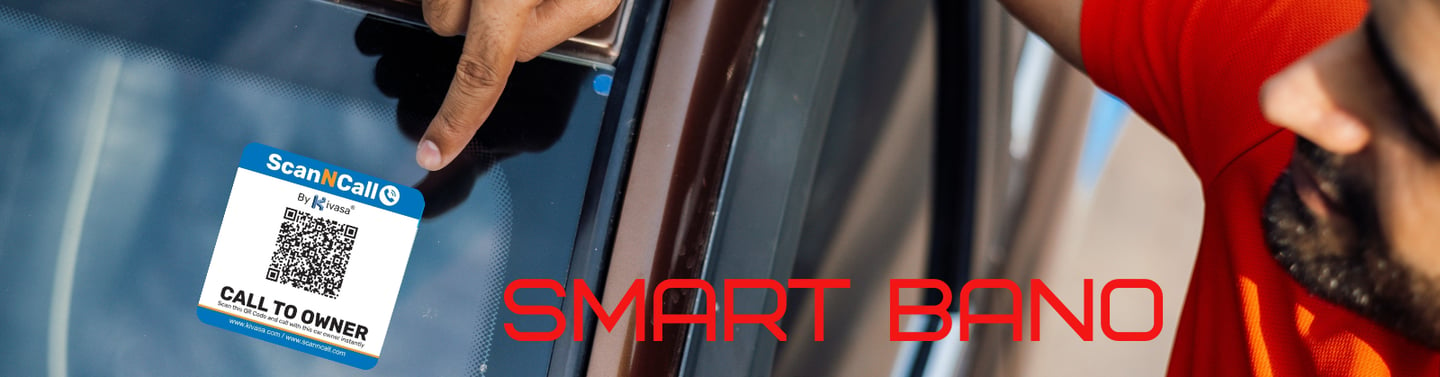
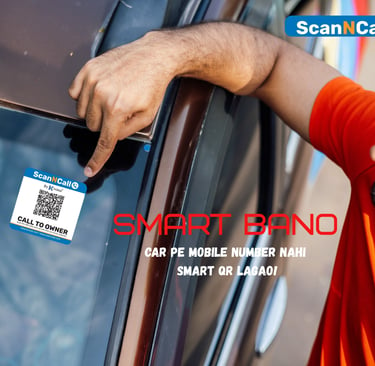
Car & Bike Stickers – sleek, weatherproof QR codes for vehicles.
Keychains & Tags – small, portable QR tags for keys, bags, or pets.
Travel Luggage Tags – strong tags for frequent flyers.
Passport & Laptop Stickers – discreet yet functional.
The idea was to make scanNcall a lifestyle accessory, not just a tool. That design philosophy helped in early adoption because people liked how it looked as much as how it worked.
Testing in Real Life
Before launch, I tested scanNcall in real situations. I put a sticker on my car. Within a week, someone scanned it to inform me about a minor scratch while I was away. That was my first “real use case,” and it felt incredible.
I also gave prototypes to friends and family. Some used them while traveling, and they actually got calls from strangers who found their bags or keys. These early tests proved the system worked in the real world.
Launching scanNcall
After more than two years of development, design, and testing, I finally launched scanNcall in India under my company Kivasa Private Limited. The launch was small but focused. I didn’t have a big marketing budget, so I relied on:
Word of Mouth – convincing friends, family, and early users to share their experiences.
Social Media – posting real stories of how scanNcall helped people.
Local Promotion – distributing samples in parking areas, travel hubs, and local markets.
Because the product solved a real problem, traction started to build slowly but surely. People who used it began recommending it to others.
Building Trust
The biggest barrier was trust. People asked:
“Will my data be safe?”
“What if someone misuses the QR code?”
“How do I know it will really work when I need it?”
To overcome this, I focused on:
Privacy-first design (masked numbers, no personal data shown).
Transparency (clear explanation of how it works).
Quality (high-quality stickers and tags that last).
Trust grew as more real stories came in—users sharing how scanNcall helped them recover lost items or avoid car conflicts.
Early Traction
Traction for scanNcall didn’t come overnight. But step by step, I saw growth:
Vehicle Owners loved it because they could be contacted in emergencies.
Parents started buying it for kids’ bags.
Travelers used it for luggage during trips.
Businesses showed interest in bulk orders for employees.
By now, scanNcall was not just a “personal solution” but also entering corporate and institutional use cases.
Global Vision
From the beginning, I knew scanNcall had global potential. Losing things is not an “Indian problem”—it’s universal. I’ve traveled to 8 countries myself, and I saw the same issue everywhere.
So, the long-term plan is:
Launch globally with region-specific pricing.
Introduce a yearly subscription model for added features.
Partner with travel companies, airports, and insurance firms.
This global vision is what keeps me pushing forward, despite financial struggles and limited resources.
Challenges and Lessons
Building scanNcall from scratch taught me countless lessons:
You don’t need to be a techie to build a tech product. If you have the vision, you can form the right team.
Simplicity wins. People love simple solutions to everyday problems.
Trust takes time. You can’t force traction; it grows with proof and consistency.
Financial struggles are part of the journey. I built most of this with very limited funds, often feeling like giving up. But persistence matters.
Global thinking from Day 1. Even though I started in India, I always designed scanNcall for the world.
The Road Ahead
Today, scanNcall has started gaining traction in India, and the next steps are clear:
Expand internationally with partners.
Improve tech stack to reduce costs (looking for alternatives to Twilio, Shopify, etc.).
Introduce subscriptions for recurring revenue.
Raise funding by presenting clear documents (balance sheet, tech stack, customer stories).
The dream is to make scanNcall a global brand for safety, convenience, and communication.
Conclusion
The journey of creating scanNcall has been one of resilience, creativity, and problem-solving. From being someone who constantly lost things to building a product that now helps others avoid the same pain, this has been deeply personal.
ScanNcall was born from frustration, designed with care, built with determination, and is now slowly finding its place in the market.
When I look back, I realize the most important lesson: a startup doesn’t start with money or skills; it starts with a problem worth solving.
ScanNcall is my attempt to solve that problem for the world. And this is just the beginning.